A Quick Grow Room Guide To Pest Control!
Getting the most out of your grow isn’t just about using the right lights, nutrients or media. Your plants also need a clean, healthy environment, and that means keeping pests out of your grow room as much as possible.
Summer is one of the worst times of year for grow room pests; warmer temperatures, thicker canopies, higher humidity and faster growth can all make your room a perfect place for pests to settle in and spread quickly.
The problem is, pests don’t just make your leaves look rough. They slow plants down, stress them out and can cost you yield if they’re left unchecked. Even a small pest issue can stop your plants from putting their energy into strong growth and proper development.
That’s why prevention is always better than cure.
If you can spot the signs early, clean up properly and use the right products at the right time, you’ve got a much better chance of stopping pests before they become a proper problem.
In this guide, we’ll cover the main pests indoor growers usually find in their grow room over summer, what the damage looks like, where to check and what to do next.
Quick Pest ID Guide For New Growers
If you’ve noticed marks on your leaves, flies around your pots or growth suddenly slowing down, use this quick guide to narrow down what you might be dealing with.
| Pest | What It Looks Like | Where To Check | What To Do |
|---|---|---|---|
| Spider Mites | Pale speckles, dusty leaves, fine webbing | Undersides of leaves, lower canopy, warm dry spots | Act fast with a plant-safe wash and improve airflow |
| Thrips | Silver scratches, black dots, twisted new growth | New growth, leaf undersides, damaged silver patches | Use natural predators and keep monitoring the canopy |
| Fungus Gnats | Tiny black flies around pots and damp media | Media surface, trays and propagation areas | Control moisture and target the root zone |
| Aphids | Small insects in clusters, curled leaves, sticky residue | New growth, soft stems and leaf undersides | Remove affected growth and use a suitable foliar wash |
| Leaf Miners | White squiggly trails running through leaves | Older leaves and lower growth | Remove affected leaves early before it spreads |
| Whitefly | Small white flies lifting from the plant when disturbed | Undersides of leaves and around the canopy | Use sticky traps, inspect leaves and treat early |
Why Pest Problems Get Worse In Summer
Indoor grow rooms already give pests a sheltered space to live in. Add summer heat into the mix and things can move quickly.
Warmer temperatures can speed up pest activity, while plants under heat stress are usually less able to recover from damage. If the canopy is too packed out, airflow is poor or dead leaves are left in the room, pests have more places to hide and spread without being spotted.
That’s why summer pest control should start before you see a full infestation.
- Check under leaves every few days
- Keep airflow moving through the canopy
- Remove dead leaves and old plant matter from the room
- Use sticky traps to spot flying pests early
- Inspect new plants and cuttings before they go into the grow room
- Clean down properly between grows
Top Tip: A five-minute pest check every few days can save you a lot of stress later. Look under leaves, around new growth and across the top of your media before pests have chance to build up.
Spider Mites
Spider mites are one of the main pests growers need to watch for, especially during warmer months. They’re tiny, they’re hard to spot early, and they can spread quickly if your room is hot and dry.

What Spider Mite Damage Looks Like
- Tiny pale, yellow or white speckles across the leaves
- Leaves looking dusty, tired or faded
- Fine webbing around leaves, stems or flowers
- Tiny moving dots on the underside of leaves
- Damage often starting in warm, dry parts of the room
Where To Check
Look underneath the leaves, around the veins and through the lower canopy. Spider mites usually sit where you’re least likely to notice them, so don’t just check the top of the plant.
If you can already see webbing, the problem is usually established and needs dealing with quickly.

What To Do Next
Remove badly affected leaves where suitable, improve airflow and treat the plant surface with a suitable wash. Keep checking daily, especially underneath the leaves, because spider mites can come back fast if you only treat once.
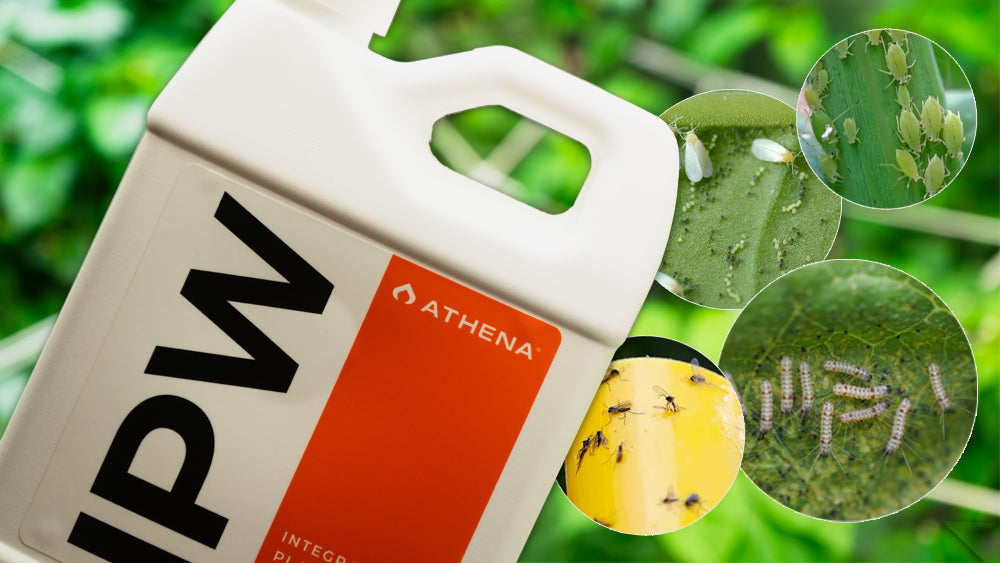
Shop Athena IPW Integrated Plant Wash and also prevent Spider Mites with our Natural Predator Kit.
Thrips
Thrips are small, fast-moving pests that scrape the surface of the leaf as they feed. The insects themselves can be hard to spot, but the damage they leave behind is usually much easier to identify.

What Thrip Damage Looks Like
- Silver streaks or scratched-looking marks on leaves
- Tiny black dots on damaged areas
- Distorted or twisted new growth
- Brown scarring on leaves
- Small, thin insects moving quickly across the leaf surface
Where To Check
Check new growth, lower leaves and the underside of damaged leaves. If you’re seeing silver scratch marks with little black dots, thrips are one of the first pests to look for.

What To Do Next
Use sticky traps to monitor movement, remove badly damaged leaves where needed and bring in natural pest predators before the population gets out of hand.
Control Thrips, Mites & Fungus Gnats With Natural Predators
Fungus Gnats
Fungus gnats are tiny black flies usually found around pots, trays and damp media. The adult flies are annoying, but the larvae are the bigger problem because they live in the root zone.

What Fungus Gnats Look Like
- Small black flies around pots or trays
- Flies appearing when you water or move pots
- Larvae living in damp growing media
- Slower growth in young plants or seedlings
- Problems getting worse when media stays too wet
Where To Check
Look around the top of the media, near pot edges and around propagation areas. Fungus gnats love damp conditions, so overwatering or constantly wet media can make the problem worse.

What To Do Next
Let media dry back properly where suitable, avoid overwatering and use sticky traps to monitor adults. Natural predators can also help target pest pressure around the root zone.
Shop Natural Pest Predators to keep them at bay, then add Lava Lite No Gnats over your pots to stop them from gaining access to your medium, then apply Sticky Traps around your plants to kill the adults.
Aphids
Aphids are soft-bodied pests that usually gather around fresh, soft growth. They can build up quickly and cause curled leaves, weak shoots and sticky residue on the plant.

What Aphid Damage Looks Like
- Clusters of small green, black or pale insects
- Curled or twisted new leaves
- Sticky residue on leaves or surfaces
- Weak, distorted shoots
- Shiny-looking leaves caused by honeydew
Where To Check
Focus on new growth tips, soft stems and the underside of young leaves. Aphids usually sit where the plant tissue is softest and easiest to feed from.

What To Do Next
Remove badly affected growth where suitable, clean sticky residue from the plant surface and treat early with a suitable foliar wash. Keep checking fresh growth because that’s where aphids usually come back first.
Shop Athena IPW For Cleaner Foliage and then pair it with Ladybirds to keep Aphids at bay.
Leaf Miners
Leaf miners are usually easy to identify because the damage looks like trails or tunnels inside the leaf. Instead of feeding on the surface, the larvae feed between the layers of the leaf.

What Leaf Miner Damage Looks Like
- White or pale squiggly lines through leaves
- Tunnel-like trails inside the leaf
- Blotchy areas where feeding has spread
- Damage that follows a clear path instead of random spotting
Where To Check
Look across older leaves and lower growth first. Once you see the pale trails, check the rest of the plant and nearby plants too.

What To Do Next
Remove affected leaves where suitable and dispose of them away from the grow room. Because leaf miners feed inside the leaf, catching the trails early is one of the easiest ways to stop the issue spreading.
Whitefly
Whitefly are small flying pests that usually sit underneath leaves. They’re easiest to spot when the plant is disturbed and tiny white insects fly up from the canopy.

What Whitefly Damage Looks Like
- Small white flying insects
- Insects lifting from the plant when leaves are moved
- Sticky residue on leaves
- Yellowing or weakened leaves
- Eggs or larvae on the underside of leaves
Where To Check
Check the underside of leaves and use sticky traps to monitor adults. If you see white insects flying up when you move the plant, it’s time to inspect the full canopy properly.

What To Do Next
Use sticky traps to monitor adults, inspect the underside of leaves regularly and treat early before the population builds. Keep the room clean and remove badly affected leaves where suitable.
Shop Sticky Traps
The 5-Minute Grow Room Pest Check
You don’t need to spend hours hunting for pests. A quick check every few days can help you catch problems before they cost you growth and yield.
- Check the underside of leaves
- Look at new growth for curling or distortion
- Watch for silver streaks, pale spots or webbing
- Check the top of the media for small flies
- Shake plants gently and watch for flying pests
- Use sticky traps to monitor movement
- Inspect new plants and cuttings before adding them to the room
If you catch damage early, you’ve got a much better chance of stopping it before it spreads through the full room.
What To Do If You Find Pests
First thing: don’t ignore it.
Pest problems rarely fix themselves indoors. Once they’re in the room, warm temperatures and dense plant growth can help them spread quickly.
Remove badly affected leaves where suitable, inspect nearby plants and decide whether you need a foliar wash, live predators, sticky traps or a full clean-down between grows.
If plants are still in the room, always choose products that are suitable for use around live plants and follow the product instructions properly.
Shop Athena IPW Integrated Plant Wash
Shop Natural Pest Predators For Thrips, Mites & Fungus Gnats
Cleaning Down Between Grows
The best time to reset a grow room is between grows, when the room is empty and you can clean everything properly.
Old plant matter, dirty trays, used pots, spillages and hidden corners can all give pests somewhere to hang around until the next run. A proper clean-down reduces the risk of carrying problems from one grow into the next.
Silver Bullet Mist is ideal for cleaning down surfaces, equipment and grow areas between grows, helping you start your next run from a cleaner space.
Shop Silver Bullet Mist For Between-Grow Cleaning →
Complete Sterilisation Between Grows
If you’ve had a serious pest issue, a quick tidy-up might not be enough. Once the grow room is empty, you can go further with a full reset.
Insecto Smoke Bombs are designed for treating empty spaces between grows, helping target pests in areas that are hard to reach by hand.
Only use smoke bombs as directed, and only in empty rooms where they are suitable to use. Always read the label before application.
Shop Insecto Smoke Bombs For Complete Sterilisation Between Grows →
Prevention Is Easier Than Pest Control
The best way to deal with pests is to stop them getting established in the first place.
Keep the grow room clean, keep airflow moving, avoid bringing untreated plants into the room and check under leaves regularly. If you see marks, flies, webbing or distorted growth, don’t leave it and hope it sorts itself out.
Whether it’s spider mites, thrips, aphids, leaf miners, fungus gnats or whitefly, the rule is simple:
Spot it early. Deal with it properly. Clean down before the next run.
If you’re not sure what pest you’re dealing with, take clear photos of the top and underside of the leaves and speak to the team in-store. The sooner you identify the problem, the easier it is to choose the right fix.
Want to learn more? Shop Pest & Disease Control here